Choosing the right fall protection system isn’t just about compliance—it’s about protecting your team, optimizing your workflow, and ensuring your investment truly meets your needs. Whether you’re outfitting a busy trailer yard or an in-shop repair bay, the wrong system can lead to underuse, inefficiency, or worse, injuries. At Eagle Safety, we help shop managers, fleet coordinators, and owners make smart, tailored decisions.
Here’s what you need to consider before purchasing a fall protection system for your truck or trailer maintenance operation:
1. Trailer Types
Not all trailers are created equal, and neither are fall protection needs. A shop that handles flatbeds will have different requirements than one working with dry vans, reefers, or livestock trailers.
- Flatbeds: Guardrails, mobile overhead arrest systems, and visual edge indicators are common.
- Dry vans & Reefers: These often benefit from mobile systems like the Eaglehook, which can be deployed both in-shop and on the road.
- Tankers & Specialty trailers: Consider systems like rigid rails or engineered lifelines for precise anchorage and multiple connection points.
2. Shop Headroom & Infrastructure
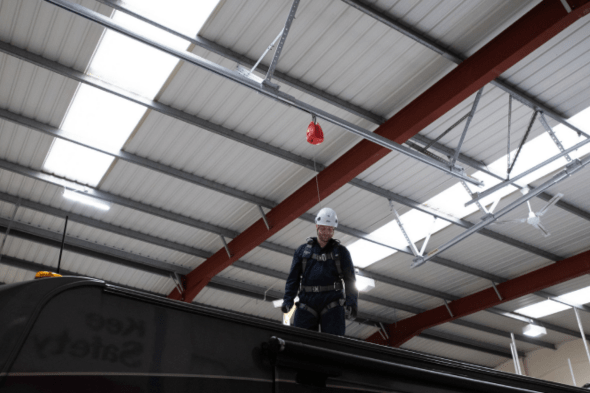
Before investing in a rigid overhead system, ask yourself: does your facility support it?
- Low ceilings or structural obstacles may prevent installation.
- If space is tight, mobile solutions or retractable cable systems may be a better fit.
- Temporary structures like scaffolding bays might also be useful where permanent installs aren’t feasible.
3. Mobility Needs
Do your repairs happen solely in-shop, or are your techs working in yards and on the road?
- Mobile Maintenance: Tools like the Eaglehook or the Malta Dynamics X-Series offer field-ready protection.
- Stationary Repair: Shops with consistent volume may benefit from fixed overhead systems.
- Mobility also affects training, deployment time, and storage.
4. Training & Team Size
How many workers will be using the system, and what is their current level of safety training?
- Systems like Eaglehook simplify training and use fewer moving parts.
- Multi-user systems need clear instructions and tight coordination.
- If you service multiple locations, think about standardizing your safety systems for consistency and training ease.
5. Budget vs Long-Term Value
It’s easy to chase the lowest price—but that often leads to poor adoption or expensive workarounds later.
- Mobile systems are often cheaper up front and cost-effective to scale.
- Engineered systems may cost more but offer high ROI in long-term use.
- Don’t forget: downtime and injury claims are the most expensive line items of all.
Final Thoughts Fall protection is a legal requirement, but it should also be a strategic decision. Choosing the right system will reduce liability, improve technician confidence, and set your shop apart. Whether it’s a mobile Eaglehook unit, a modular rigid rail setup, or a mix of solutions, the right fit starts with asking the right questions.
Need help making that choice? Reach out to Eagle Safety—we’re here to guide you through it.